Fixing a Tripping Circuit Breaker, Fast
A breaker that trips once is doing its job. One that trips over and over, or the second you reset it, is pointing at something underneath that wants attention.
Here is what is actually going on when a circuit keeps dropping out, how to judge the urgency, and how the real cause gets found. If the board smells hot or a breaker refuses to hold, put the switch down and call (02) 9054 3079 instead of flicking it again.
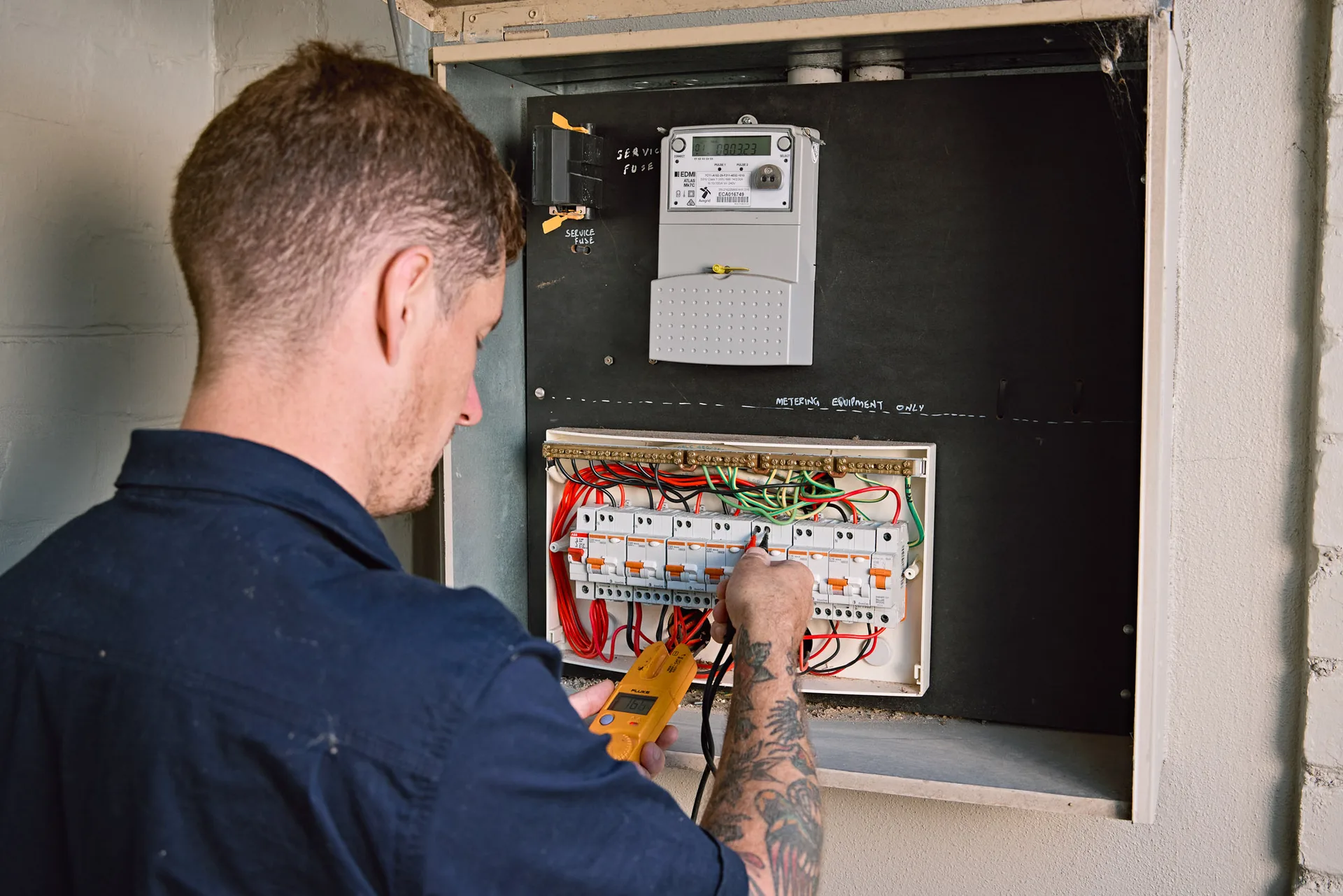
Why Your Circuit Is Tripping
A breaker operates as a deliberate safety response. It cuts power the instant it detects more current than the circuit is rated for, or current escaping somewhere it should never go.
The device did its job, so the only question worth asking is why it had to. Sometimes the answer is a one-off overload, a brief moment where too much was asked of one run.
Sometimes it is a genuine fault: a damaged cable, a dying appliance, or a connection degraded to the point of leaking. From where you stand at the switchboard, both stories look exactly the same, which is why reset-and-forget is riskier than it feels.
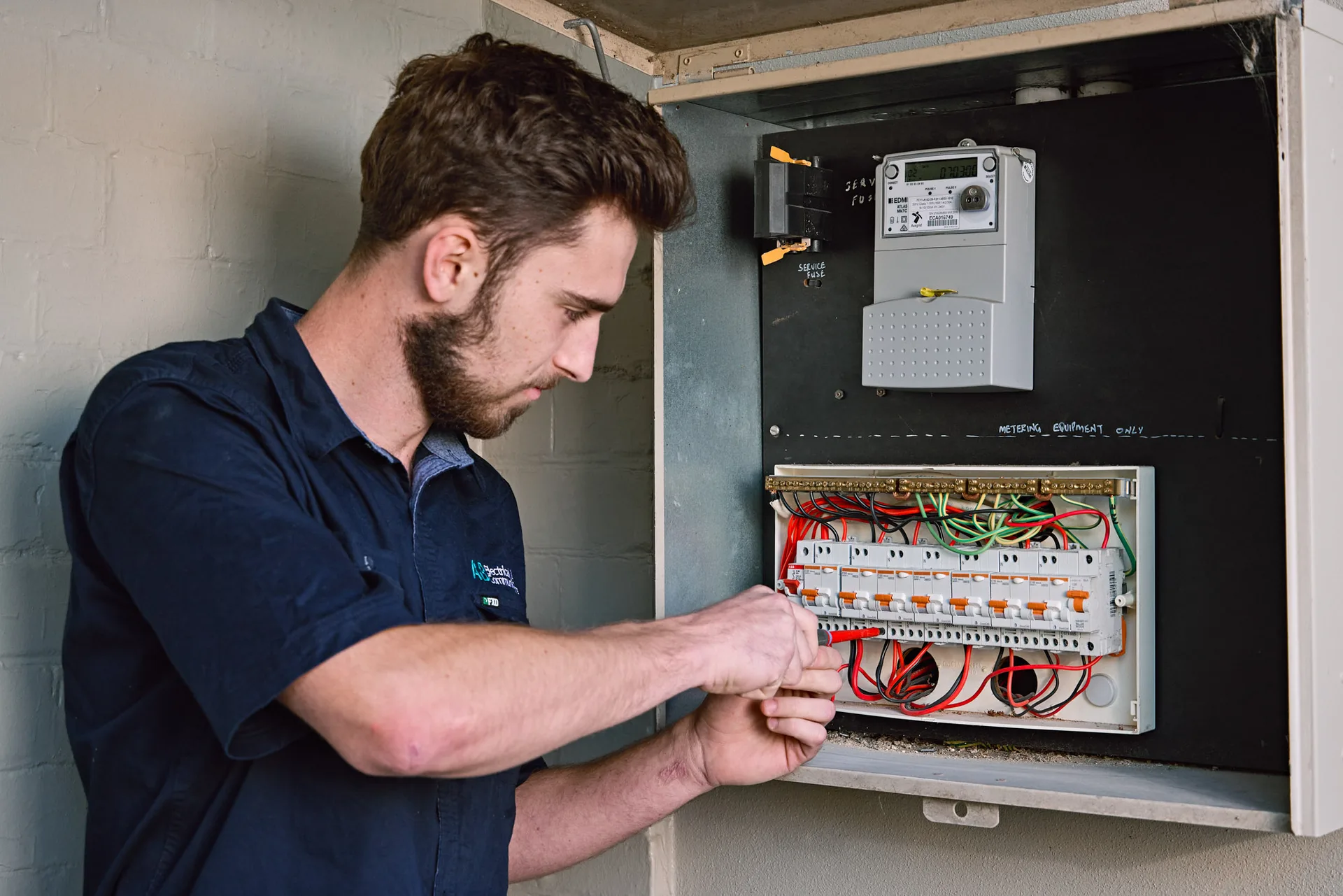
When a Tripping Breaker Is Urgent
A single trip with an obvious explanation, say a heater and a kettle sharing one circuit, is low urgency once the load is spread and the reset holds. Note it, spread the appliances, and move on with the evening.
Move it up the list when the circuit trips repeatedly, trips with nothing unusual running, or the breaker will not stay up at all. Add the smallest whiff of heat from the board, or warmth you can feel on it, and it becomes an immediate call.
Every reset without a diagnosis hands the fault another audition, and heat-generating faults use each one to get worse.
Our rule of thumb is simple. Two trips in quick succession means stop resetting and pick up the phone.
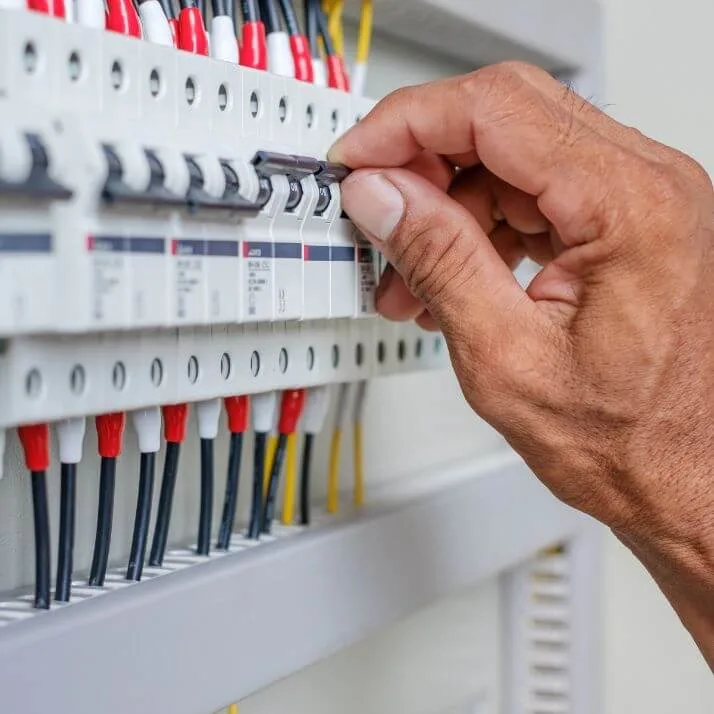
The Most Likely Causes
The suspects behind a repeat-tripping breaker, ranked from everyday to unusual:
- Several high-draw appliances on one circuit, the winter kitchen-plus-heating combination being the classic.
- A faulty appliance pulling excessive current, dropping the circuit the moment it switches on.
- A connection worked loose along the run, creating exactly the fault current a breaker exists to catch.
- The breaker itself wearing out, losing its ability to hold under a load it once handled easily.
- Damaged cable insulation, letting current leak to earth and waking the safety switch.
- Water in a badly sealed outdoor fitting, a regular find after wet weeks.
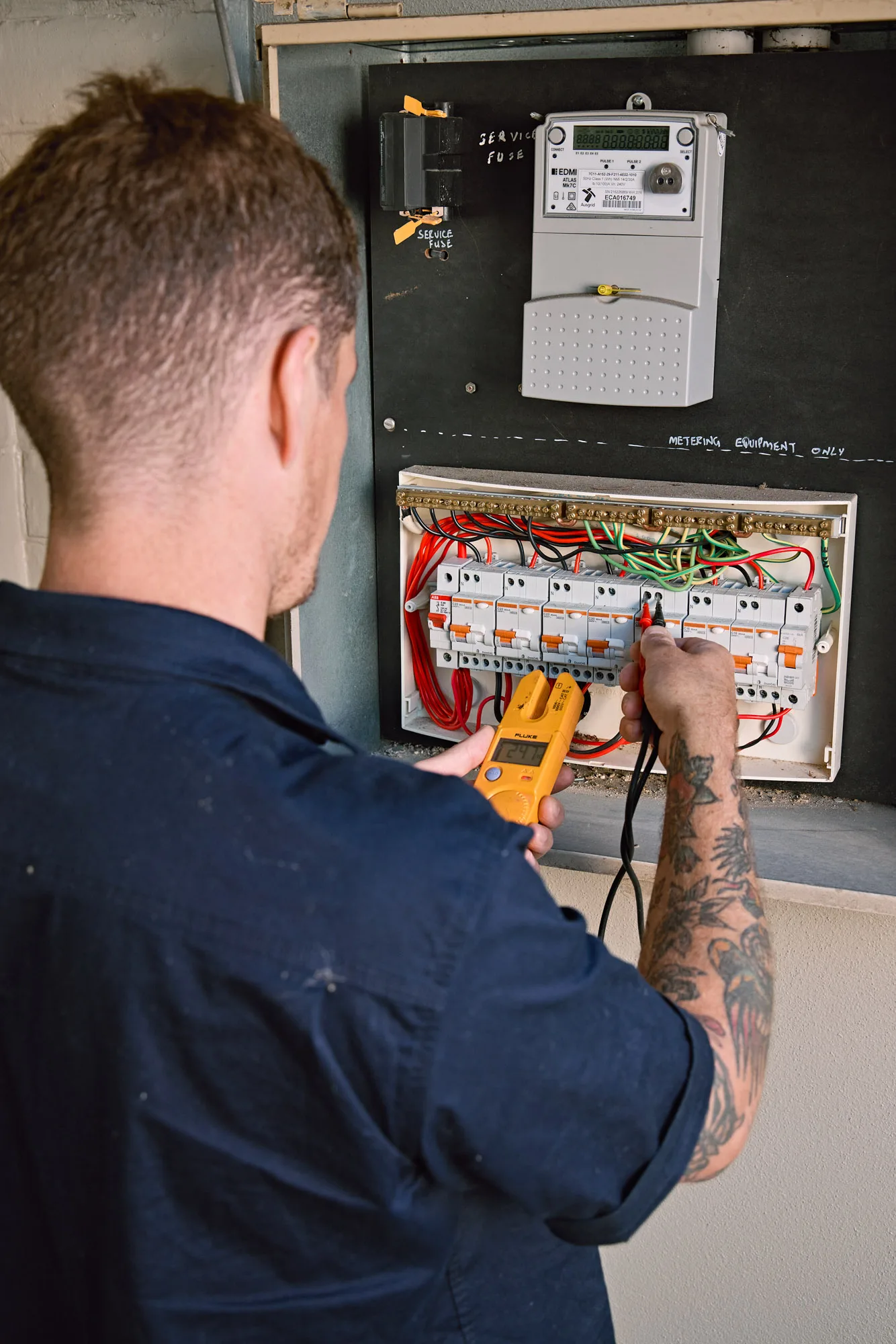
What To Do Right Now
- Unplug whatever was running at the moment it tripped, then reset the breaker once. Once only.
- If it drops again immediately, leave it down. Repeated resets are the one thing we ask you not to do.
- Sniff and feel around the board, carefully. Any warmth or odour upgrades this to urgent.
- Call (02) 9054 3079 with the tally: what was plugged in, and how many trips so far.
How We Fix the Fault for Good
Testing replaces blame. A breaker that drops under load can be reacting to half a dozen different causes that all look identical from the hallway, so each variable gets isolated in turn.
The breaker itself is checked for wear first. Then we work along the circuit, testing connections and any fixed appliances sharing the run, until the trigger is confirmed rather than guessed.
A worn-out breaker is a quick swap once nothing else on the circuit is implicated. A wiring or connection fault gets traced and corrected properly, never hidden behind a bigger breaker, which only postpones the damage and moves it deeper into the wall.
And when the honest finding is a circuit that has outgrown its size, we put real numbers on a second circuit or a larger board, so the decision is yours to make with facts in hand. Repairs are tested on the spot and certified where notifiable.
Safety Switch or Breaker? Reading the Board
Two different guardians live in a modern switchboard, and knowing which one operated is a genuinely useful clue to pass on.
A circuit breaker responds to overload and short circuits. When it drops, think quantity: too much current asked of that run, or a hard fault along it.
A safety switch responds to current leaking to earth, the kind that goes through a person. When that one operates, think escape: moisture in a fitting, damaged insulation, or an appliance leaking internally.
On many boards one combined unit does both jobs, so the distinction is not always visible. But where your board labels them separately, telling us which switch fell saves real diagnostic time.
Keeping It From Coming Back
Careful resetting never solved a repeat trip; removing the reason for the trip does. Four moves carry nearly all the weight here:
- Spread the big loads. Electrical repairs on an overworked circuit beat running every heavy appliance off one point.
- Review an ageing board through switchboard upgrades if trips are multiplying across different circuits.
- Weatherproof the outdoor points when trips follow the rain in.
- Retire the reset habit. The underlying fault never leaves on its own.
The Beecroft Pattern Behind This Fault
The boards behind this suburb's period homes were drawn up for a handful of lighting circuits and, often, one power circuit serving the entire house. That was generous in 1915.
Modern life asks vastly more of the same skeleton. Where the board has never grown alongside the appliances, individual circuits carry loads their designers never imagined, and the breaker that keeps tripping is simply the honest messenger of that gap.
We meet it constantly in the streets around St John's Anglican Church and the older parts of the village, where homes that kept their period character often kept their period electrics too.
Other Faults We Chase Down and Where We Work
Tripping alongside the scorched-outlet version of this problem is a more serious combination, covered on that page. If the whole board goes dark rather than one circuit, power outages is the better read.
Beyond Beecroft, the same diagnostic work covers Carlingford and Normanhurst, with the same testing-first approach on every board.

Book an Electrician Today
A breaker that will not stay up is handing you information, and one more reset is not the answer to it. Call (02) 9054 3079 for a proper diagnosis, with non-emergency bookings often same or next day.
Common questions
Tripped Circuit Breaker FAQs
What people want to know once a breaker stops staying up.
Is it the appliance that's faulty, or the wiring?
Both are possible, and testing is the only reliable way to tell. An appliance fault usually trips the breaker consistently whenever that one item runs, while a wiring or connection fault can trip regardless of what's plugged in, which is a useful clue but not a guarantee.
Will the repair come with a certificate?
Where the fix counts as notifiable electrical work, such as replacing a faulty breaker or correcting wiring, yes. You'll get a Certificate of Compliance confirming it was fixed and tested properly.
Why does the breaker only trip at certain times of day?
Because it's tied to load, not a fixed fault. A circuit that copes fine most of the day can trip once several appliances run together of an evening, which points to the circuit carrying more than it comfortably can rather than a single broken component.
Could a non-compliant repair cause problems with insurance later?
It can, which is reason enough to avoid the risk altogether. Getting the fault properly diagnosed and, where applicable, certified means there's a clear record if it's ever needed, rather than a DIY reset habit with nothing behind it.
Can I keep using the circuit while I wait for someone to look at it?
Cautiously, yes, if it tripped once and reset normally with nothing unusual plugged in. If it trips repeatedly, won't reset, or trips the moment you plug something back in, stop using that circuit and call.
Is a tripping breaker always an emergency?
Not always, but it should never just be reset and ignored either. A single trip with an obvious cause, like an overloaded double adapter, is low urgency. Repeated trips with no clear cause, or any smell or warmth at the board, are not.